Brominated Flame Retardant Extraction Techniques
Keywords: brominated flame retardants (BFRs), polymer recycling, scCO₂, UV-Visible irradiation, circular economy, decontamination
Brominated flame retardants (BFRs) are widely used in polymeric materials to improve their fire resistance. They can be found in a variety of applications, particularly in electrical and electronic equipment and other technical products. While these additives provide important fire-safety properties, their presence can also create challenges when polymer waste is recycled and reused. Within the Circoplast project, UMET, Centexbel, LCPE-UGent, and Materia Nova are investigating innovative approaches to improve the treatment and valorization of polymers containing BFRs. A particular focus is placed on the use of UV-Visible irradiation and scCO2 as potential approaches for reducing the bromine content of polymeric materials.
UV-VIS technique: by UMET-CNRS
Investigating brominated ABS polymers
The work carried out at UMET focuses on acrylonitrile butadiene styrene (ABS), a polymer widely used in technical applications. Different BFR systems are being investigated, including decabromodiphenylethane (DBDPE), tetrabromobisphenol A (TBBPA) and hexabromocyclododecane (HBCDD).
The objective is to investigate the behaviour of these brominated compounds under controlled irradiation conditions and to assess whether UV-visible treatment can contribute to their removal from the polymer matrix.
UV-visible irradiation as a potential debromination approach
The experimental work is based on UV-visible irradiation in the wavelength range of approximately 250–500 nm. The samples are irradiated under controlled conditions, using lamps with a power of 400 W. The treatment is performed under rough vacuum, with a pressure of approximately 10-2 mbar, and an irradiation time of one hour.
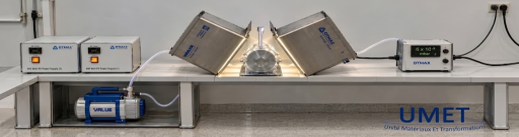
Figure 1: Experimental UV-Visible reactor setup developed and implemented at UMET
The effect of irradiation is then evaluated by comparing the materials before and after treatment. Several complementary techniques are used at UMET, including Fourier Transform Infrared Spectroscopy (FTIR), Thermogravimetric Analysis (TGA), Differential Scanning Calorimetry (DSC), X-Ray Fluorescence (XRF), High-Performance Liquid Chromatography (HPLC) and Gas Chromatography-Mass Spectrometry (GC-MS). XRF is used to monitor changes in bromine content, while the other techniques provide information on the chemical structure, composition and thermal properties of the materials.
TOWARDS MORE CIRCULAR POLYMER MATERIALS
The preliminary results obtained at UMET show that UV-visible irradiation can lead to a measurable reduction in the bromine content of ABS containing BFRs. These results provide an encouraging basis for further investigation of the process and its potential for polymer decontamination.
The next steps will include gaining a better understanding of the mechanisms involved, optimizing the irradiation conditions, evaluating their impact on the polymer’s chemical and thermal properties, and identifying a suitable method for recovering and valorizing the bromine released during the treatment.
scCO2 technique: by Centexbel in collaboration with LCPE-UGent
Investigating scCO₂ extraction for BFR-containing polymers
Complementary to the UV-visible irradiation work performed at UMET, Centexbel is investigating the use of supercritical carbon dioxide (scCO₂) as a potential approach for removing BFRs from polymer materials. Due to its unique properties, scCO₂ can selectively extract contaminants while limiting the impact on the polymer matrix.
Within Circoplast, polymer pellets containing BFRs such as DBDPE and TBBPA are produced by compounding and subsequently treated using scCO₂. The efficiency of the extraction process is evaluated by comparing the contaminant content before and after treatment.
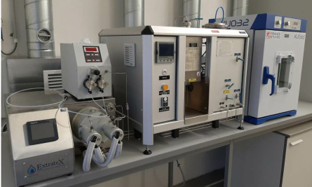
Figure 2: Experimental scCO2 setup at Centexbel
Process optimization through collaboration
The work focuses on optimizing the extraction process by investigating the influence of parameters such as pressure, temperature, extraction time, CO₂ flow rate and co-solvent concentration. Particular attention is given to the use of co-solvents, which can improve the extraction efficiency of BFRs.
The selection and evaluation of suitable co-solvents is carried out in collaboration with LCPE-UGent. Different co-solvent systems are being assessed to maximize contaminant removal while preserving polymer quality. In parallel, the influence of polymer type and BFR concentration on extraction performance is also being investigated. This knowledge is essential for understanding how different waste streams respond to the treatment and for defining optimal process conditions for industrial implementation.
Towards scalable polymer decontamination
The first results demonstrate the potential of scCO₂ extraction as a promising environmentally friendly technique for reducing brominated contaminants in polymers. Future work will focus on further optimizing the process and assessing its applicability at industrial scale, including the integration of scCO₂ extraction into continuous polymer processing lines.
Collaboration within Circoplast
The work carried out by UMET, Centexbel, LCPE-UGent, Materia Nova and the other Circoplast partners highlights the project's collaborative approach to the treatment of polymers containing BFRs. By combining complementary expertise and technologies, the consortium is developing innovative solutions for polymer decontamination, recycling and valorization.
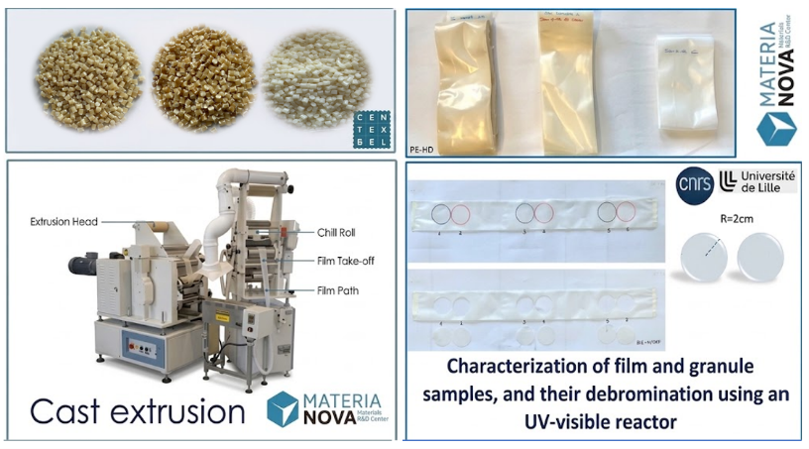
Figure 3: From polymer extrusion to debromination: A collaborative approach
Through this collaboration, Circoplast aims to transform difficult-to-recycle plastics into safer and more valuable secondary raw materials, contributing to a more circular and sustainable plastics economy.